Street Legality Comes Down to Three Rules
An electric dirt bike is not automatically street legal. In most of the United States, the rules stack from three layers at once: federal speed classes, state motor-vehicle law, and the specific land manager where you want to ride. The same bike can be legal on private land in one county and illegal on a public trail twenty minutes away in another.
If you are still deciding between an electric and a gas machine, our comparison of electric vs gas dirt bikes covers the ownership differences, and our UL 2272 battery safety guide explains what the standard actually tests.
The Three Rules Deciding Legality
Rule one is a federal speed class. Machines that top out around 25 mph and meet certain equipment standards are often classed as low-speed vehicles or neighborhood electric vehicles, while anything faster is usually treated as a motorcycle or off-highway vehicle. Rule two is state law, because many states assign wattage and speed thresholds that put an electric dirt bike in the same bucket as a small motorcycle. Rule three is where you actually ride, and it is the one that surprises most buyers.
Spend a few minutes on these before you spend money:
- Confirm your state DMV rules for electric off-highway or motorized vehicles.
- Check the speed and wattage classifications that apply to the bike you want.
- Call the park, forest, or trail manager and ask whether motorized vehicles are allowed.
- Check your local ordinance, because cities add restrictions on top of state rules.
There is no single national answer, so the responsible move is to check your state DMV and the local land agency before you buy. Nobody can give you a blanket yes for every road.
Wattage and Speed Are the Deciding Numbers
Most state lines are drawn at speed. A bike restricted to about 20 to 25 mph may qualify for a neighborhood or low-speed class, while a bike with a higher top speed moves into motorcycle territory. On the legal side, higher wattage and higher top speed push a bike toward registration, a title, and sometimes an operator license or a minimum age.
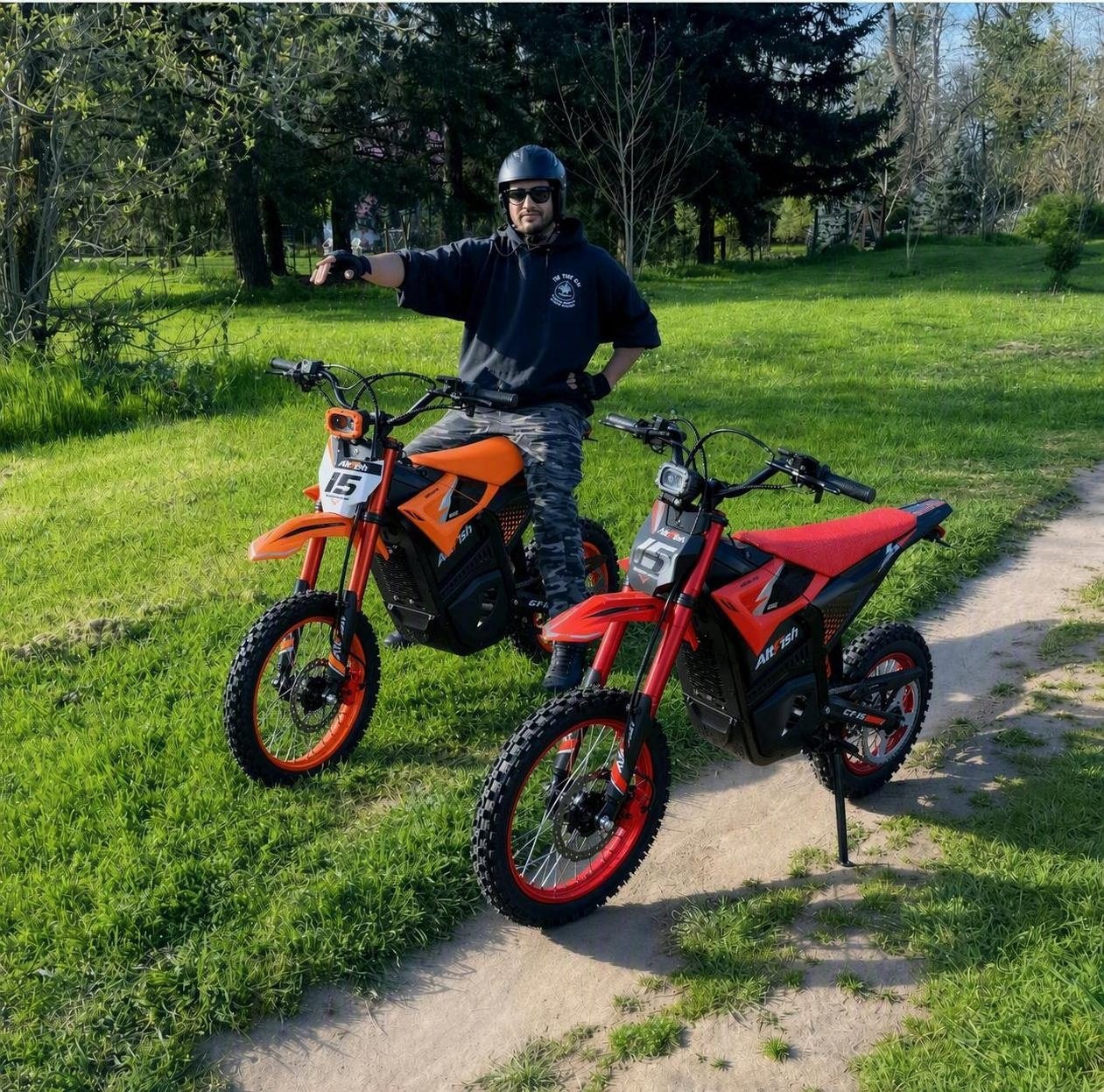
A full-size machine is a different experience from a light commuter. Our 3,500W peak mid-drive electric dirt bike tops out near 40 mph and is a proper off-road vehicle, which makes it right at home on private land with permission. On public roads, 40 mph almost certainly places it in the motor-vehicle category, so confirm the rules for your address before relying on it for street use.
On-Road vs Off-Road Use
Off-road use is simpler. With the landowner permission or on public motorized off-highway trails, an electric dirt bike usually needs no registration and no license, but the trail must allow motorized vehicles. That is not the same as an unpaved trail open to mountain bikes.
On-road use is the hard case. Street legality typically means registration, often insurance, and the right equipment, depending on the class your state assigns. Whether any electric dirt bike is street legal comes down to those local classifications, not to a sticker on the box.
The practical rule: assume electric dirt bikes are not street legal unless you have verified your state DMV class and your local rules. Verify, then ride.
Safety and Battery Matters
Legality is separate from safety, but both matter over years of ownership. Choose a bike with dual hydraulic disc brakes and full suspension, and charge only the pack that shipped with the bike. The 3,500W model includes both safety layers.
On the compliance side, our electrical system is CE, FCC, and RoHS tested, with the battery pack tested to the UL 2272 standard. No product should be treated as federally certified on the strength of a marketing claim, so when you compare bikes, ask the seller exactly which standards the pack and charger were tested to.
Frequently Asked Questions
Is an electric dirt bike street legal? It depends on your state and local rules. Most electric dirt bikes are off-highway vehicles, not street legal by default. Check your state DMV classification for the speed and wattage class of the bike you want.
Do I need a license or registration? Off road on private land with permission, usually not. On public roads or motorized trails, often yes, and that can include registration, insurance, a minimum age, or a license class. Confirm with your state DMV.
Can I ride on trails that allow mountain bikes? Only if the trail explicitly allows motorized vehicles. Many bike trails ban them. Ask the land manager for the specific trail before you ride.